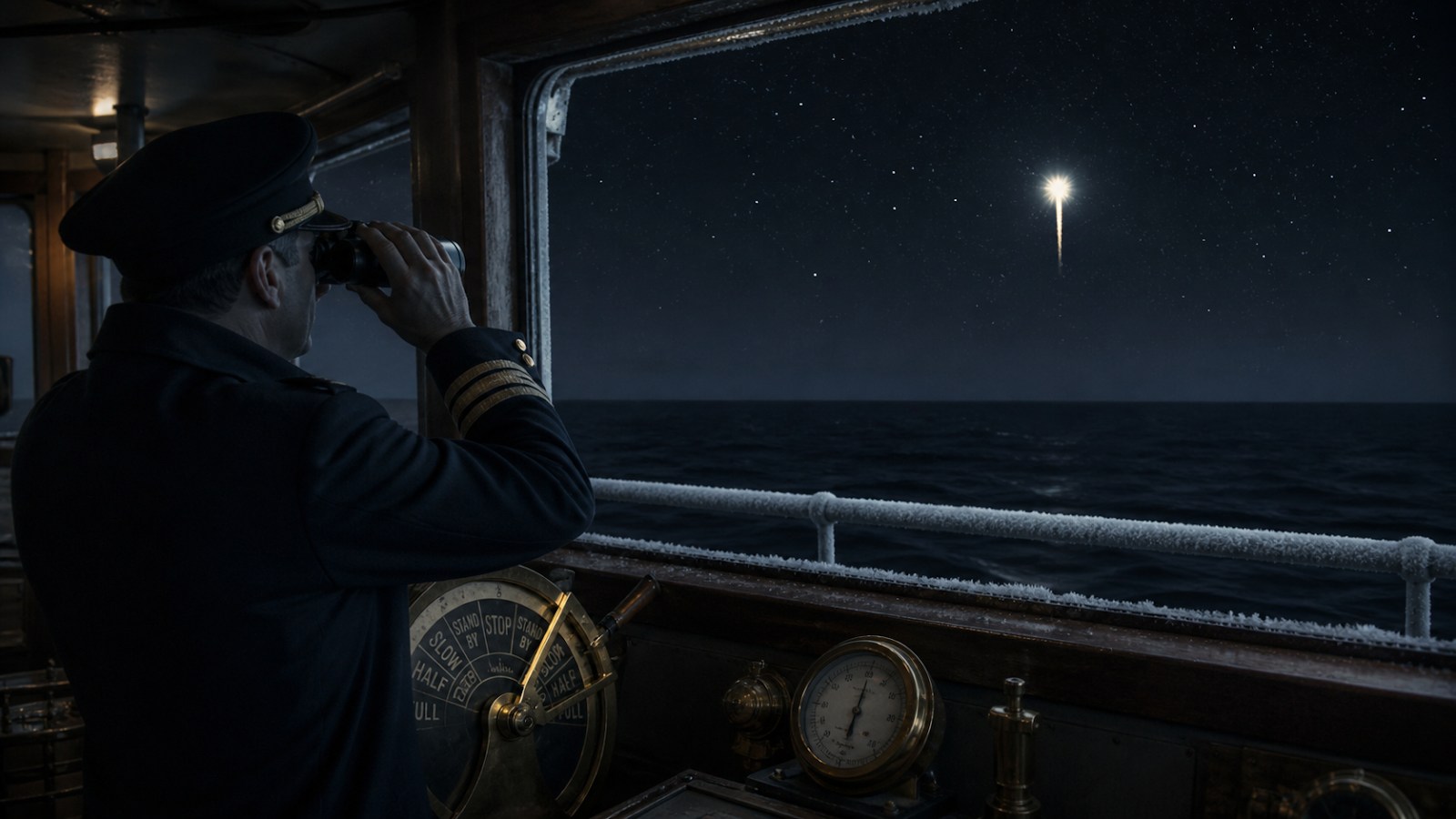
On the bitterly cold, moonless night of April 14, 1912, the calm surface of the North Atlantic mirrored a vast ocean of unblinking stars, creating an illusion of absolute peace across the dangerous ice fields. Roughly ten to nineteen miles away from where the RMS Titanic steamed at full speed, a modest British steamship named the SS Californian lay completely motionless, her engines shut down for the night amidst surrounding pack ice. Aboard the Californian, lookout watches scanned the flat horizon, noting the distant twinkling lights of an unidentified large vessel that seemed to glide smoothly into view before coming to a sudden standstill. In the ship’s small chartroom and open bridge, officers observed the mysterious stranger through binoculars, casually debating whether the distant vessel was a fellow tramp steamer, an approaching passenger liner, or a mere mirage of light across the freezing inversion layer. The sea was so eerily calm that night that sound and sight played deceptive tricks on human perception, blurring distances and distorting silhouettes in the crystalline air. Beneath the deck, the Californian’s sole wireless operator, Cyril Evans, had switched off his radio apparatus and retired to his bunk after a grueling sixteen-hour shift, just minutes before disaster struck the Titanic. What followed on the Californian's bridge over the next four hours would become one of the most agonizing, intensely debated, and haunting enigmas in maritime history. As midnight approached, the stage was set for an incomprehensible breakdown in communication that would forever link two ships across an impassable stretch of frozen sea.
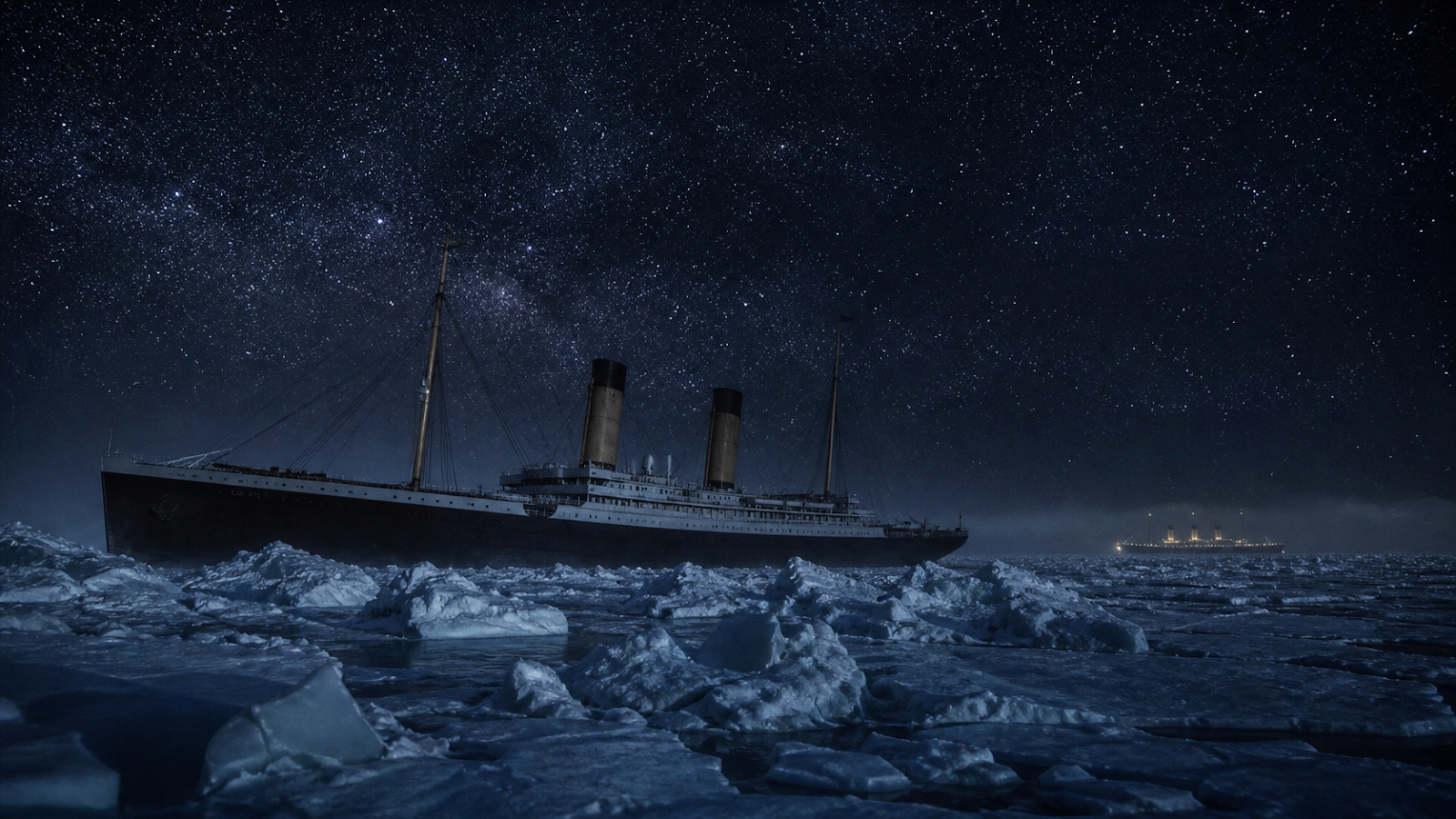
Between 12:45 AM and 2:00 AM, officers on the Californian’s bridge observed a sequence of white rockets shooting high into the midnight sky above the distant ship, bursting into showers of glowing sparks. Apprentice James Gibson and Second Officer Herbert Stone repeatedly reported these unusual pyrotechnic flashes to Captain Stanley Lord via the speaking tube, noting that the distant ship looked strangely tilted and low in the water. Inexplicably, Captain Lord chose not to wake his sleeping wireless operator to inquire about the mysterious vessel, assuming instead that the rockets were harmless company identification signals or celebratory displays. While the crew of the Californian attempted to communicate using a hand-operated Morse signaling lamp, the vast distance and atmospheric conditions rendered their flashing light completely indecipherable to the panicked lookouts on the Titanic. Onboard the sinking Titanic, Fourth Officer Joseph Boxhall and Captain Smith watched the distant masthead lights of the mystery vessel with desperate hope, firing eight white distress rockets into the heavens while shouting in vain for help. To the terrified passengers boarding lifeboats, the enigmatic vessel on the horizon appeared close enough to reach by rowboat, yet it remained maddeningly out of reach as an unreachable mirage of salvation. By 2:20 AM, the distant lights had vanished beneath the horizon, leaving the Californian's watch officers to assume the stranger had simply steamed away into the night. Only when Cyril Evans re-opened the wireless set at 5:30 the following morning did the devastating truth crash over the Californian: the Titanic had foundered in the ice with catastrophic loss of life right before their eyes.
The tragic narrative of the SS Californian stands as an eternal testament to the devastating consequences of complacency, hesitation, and missed opportunities in moments of crisis. In the extensive British and American inquiries that followed the disaster, Captain Lord and his officers faced severe scrutiny and public condemnation for failing to take proactive action upon sighting distress rockets. Although historical debates continue to this day regarding the exact nautical distance between the two ships and the true reach of the Californian's rescue capabilities, the emotional weight of the tragedy remains indisputable. The catastrophic failure to awaken the wireless operator spurred landmark international maritime legislation, ensuring that no ship at sea would ever again leave its radio equipment unmonitored during the night. In the collective memory of the Titanic, the Californian remains a ghostly silhouette suspended between what was and what might have been—a haunting symbol of proximity without rescue. The silent white rockets that burst above the North Atlantic continue to echo through maritime history as a universal warning against turning a blind eye to cries in the dark. Ultimately, the story of the Californian teaches us that in our most critical hours, the distance between tragedy and salvation often comes down to the courage to listen and act.

Comments
Post a Comment