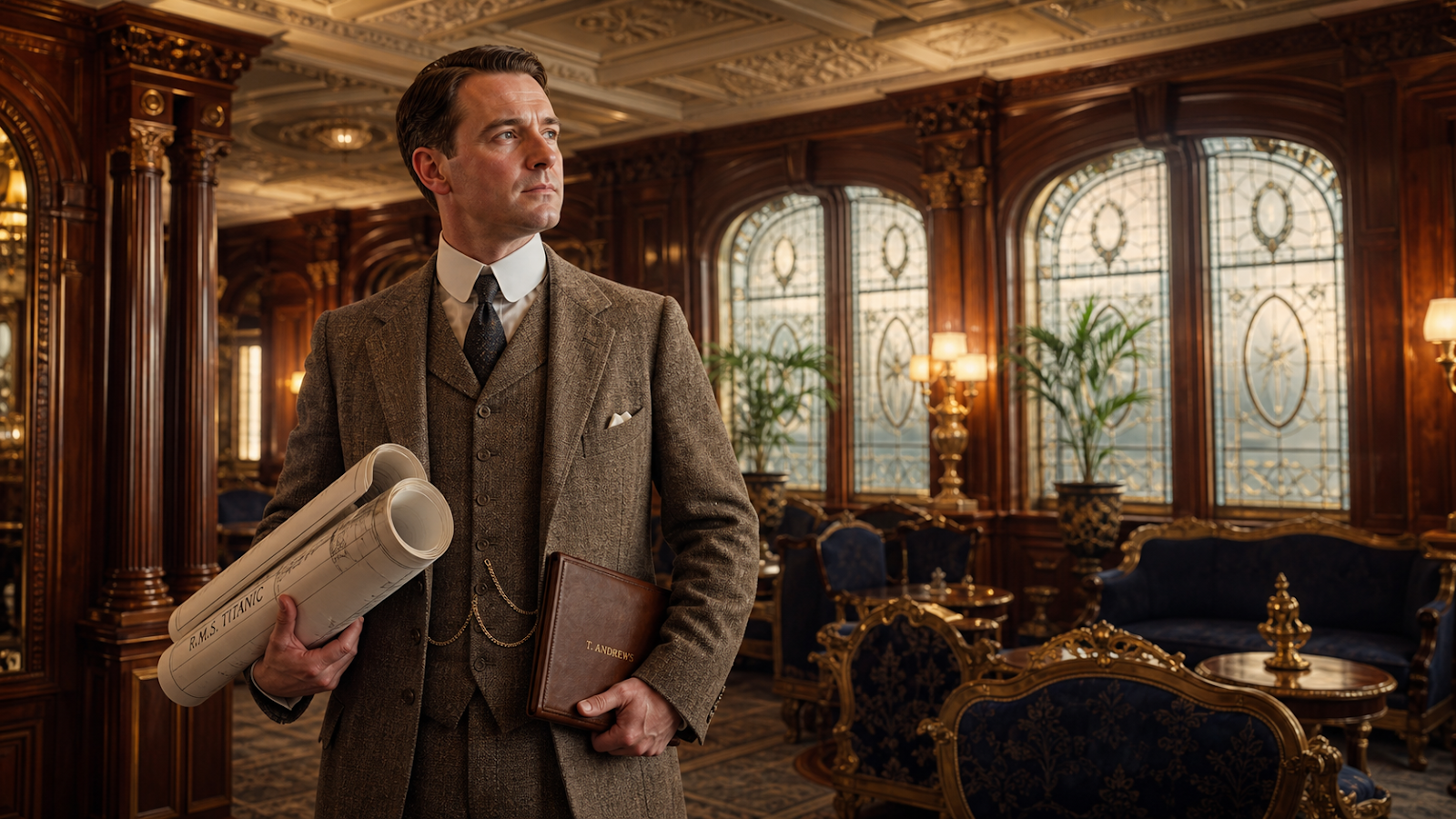
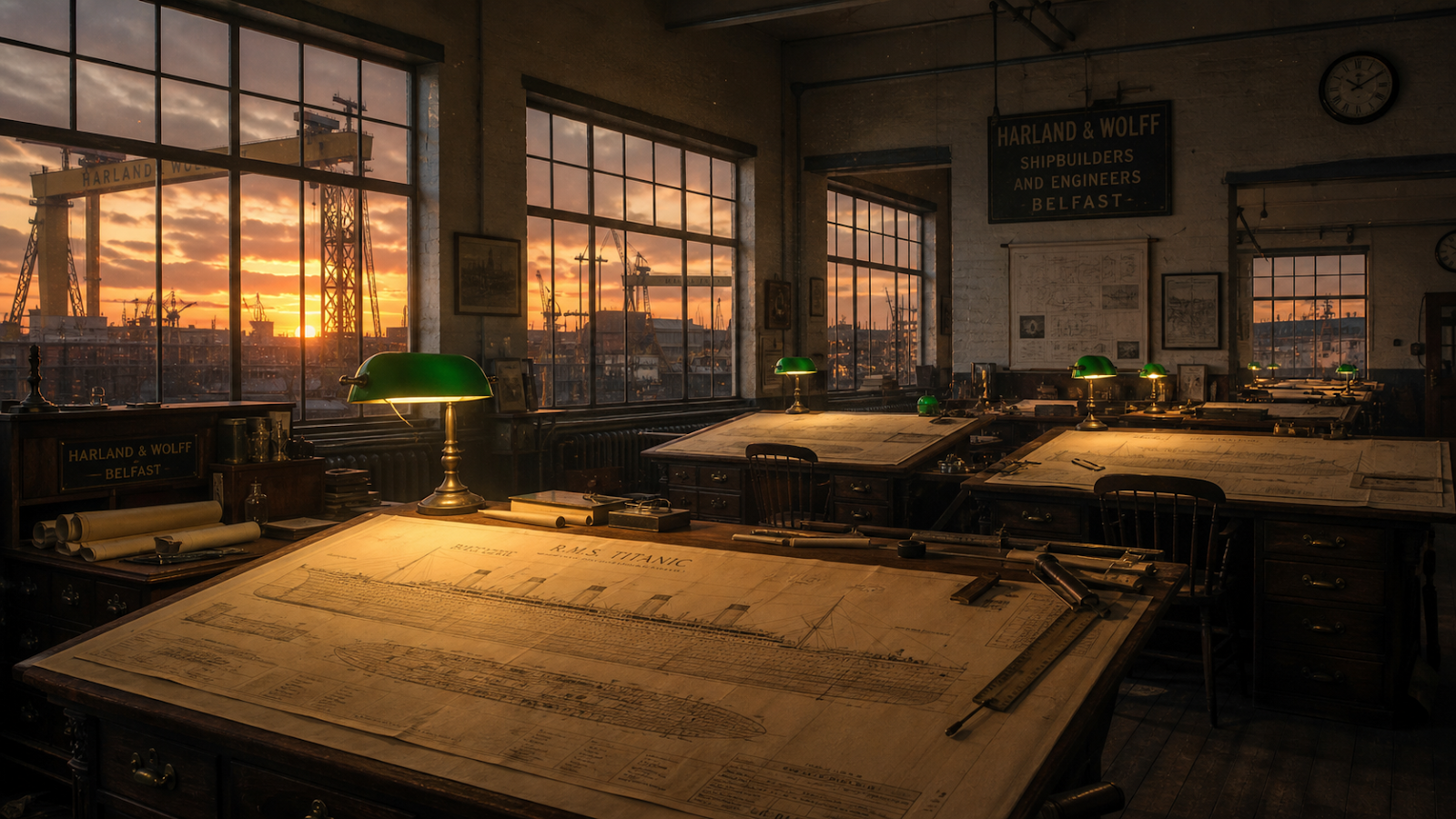
In the opulent drawing rooms and sprawling slipways of Belfast’s Harland and Wolff shipyard, managing director Thomas Andrews had spent years pouring his intellect, passion, and soul into the creation of the Olympic-class ocean liners. Known affectionately as "Tommie" by thousands of shipyard workers who admired his approachable warmth and relentless work ethic, Andrews understood every steel beam, hydraulic watertight door, and decorative molding of the RMS Titanic better than any living soul. When the majestic vessel embarked on her maiden voyage from Southampton on April 10, 1912, Andrews was on board as the head of the builder's guarantee group, carrying a notebook to record even the smallest opportunity for improvement. Dressed impeccably in tailored Edwardian wool, he could be seen roaming the passageways at all hours, personally inspecting steward pantries, checking ventilation shafts, and listening warmly to passenger suggestions. His vision was not merely to construct the world’s largest moving object, but to create a floating sanctuary of unparalleled grace, comfort, and engineering integrity. On the evening of April 14, after dining pleasantly in the first-class saloon, Andrews retired to his stateroom A-36, completely surrounded by detailed blueprints, schematics, and design charts. He had no inkling that before dawn, the grand ship he loved so deeply would put his engineering genius and his personal character to the ultimate, heartbreaking test. When the sudden jolt of ice against steel shook his cabin table, the master shipbuilder grabbed his coat and stepped out into destiny.
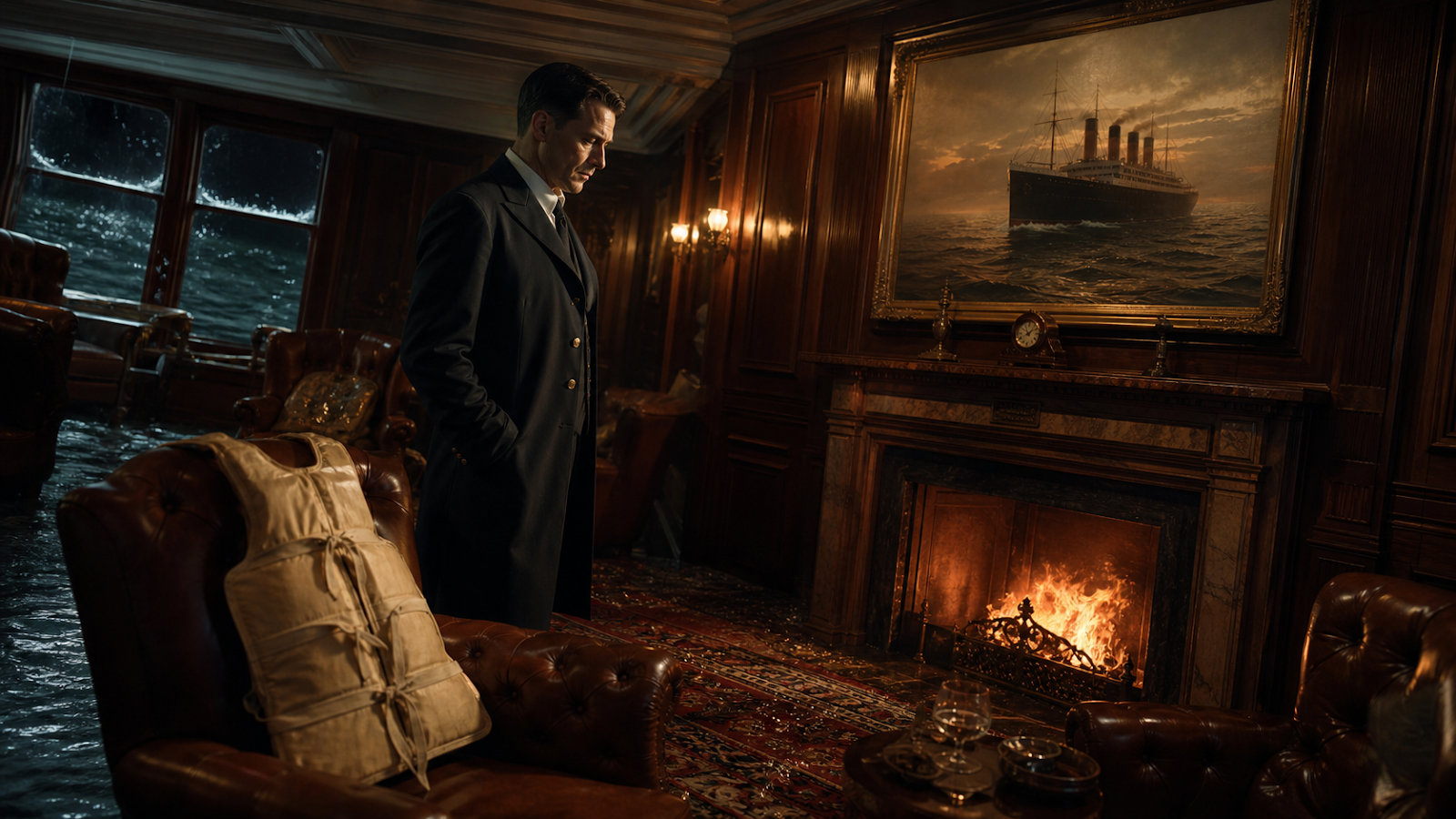
Summoned immediately to the bridge by Captain Smith following the collision, Andrews descended into the flooding mail room, baggage holds, and boiler rooms with a flashlight to assess the structural devastation. Upon returning to the bridge with water calculations and damage reports in hand, Andrews delivered the devastating mathematical verdict with unwavering clarity: with five forward compartments breached, the Titanic was doomed to founder in approximately two hours. Rather than succumbing to despair over the impending destruction of his life’s crowning work, Andrews immediately channeled every ounce of his remaining energy into saving lives. Moving tirelessly through first-class corridors, steerage stairwells, and crowded boat decks, he pleaded with reluctant passengers to put on their lifebelts and enter the lifeboats without hesitation. Knowing intimately that the ship lacked sufficient lifeboat capacity for everyone on board, Andrews urged officers to fill each boat to maximum capacity, famously chiding those who hesitated to load women and children. Survivors later recalled seeing Andrews roaming the upper decks in his final hours, throwing wooden deck chairs overboard into the ocean so that drowning souls might have something to cling to in the freezing waters. In his reported final moments around 2:10 AM, Andrews was seen standing alone in the First Class Smoking Room, staring quietly at Norman Wilkinson's painting "Plymouth Harbour" above the fireplace, having discarded his own lifebelt. He chose to remain with his beloved ship until the end, sacrificing every possibility of personal survival while ensuring that as many souls as possible escaped the sinking leviathan.
The memory of Thomas Andrews stands as one of the most sublime portraits of moral responsibility, artistic devotion, and quiet nobility in human history. In an era often defined by industrial hubris and commercial competition, Andrews represented the purest ethos of the master craftsman—one whose love for his creation was matched only by his profound reverence for human life. His heroic conduct during the Titanic’s final two hours proved that true nobility lies not in titles or wealth, but in the selfless choices one makes when catastrophe strikes. When news of his loss reached the shipyards of Belfast, thousands of hardened laborers openly wept for the man who had treated them as equals and partners in building greatness. The memorial hall erected in his hometown of Comber, Northern Ireland, remains a poignant tribute to an architect who gave his life for the passengers who trusted his craft. More than a century later, Thomas Andrews continues to inspire generations as an enduring symbol of integrity, showing the world how to face impossible tragedy with poise, compassion, and unmatched grace. His legacy is etched not merely into the blueprints of a lost ship, but into the timeless annals of humanity's finest hours.
Comments
Post a Comment