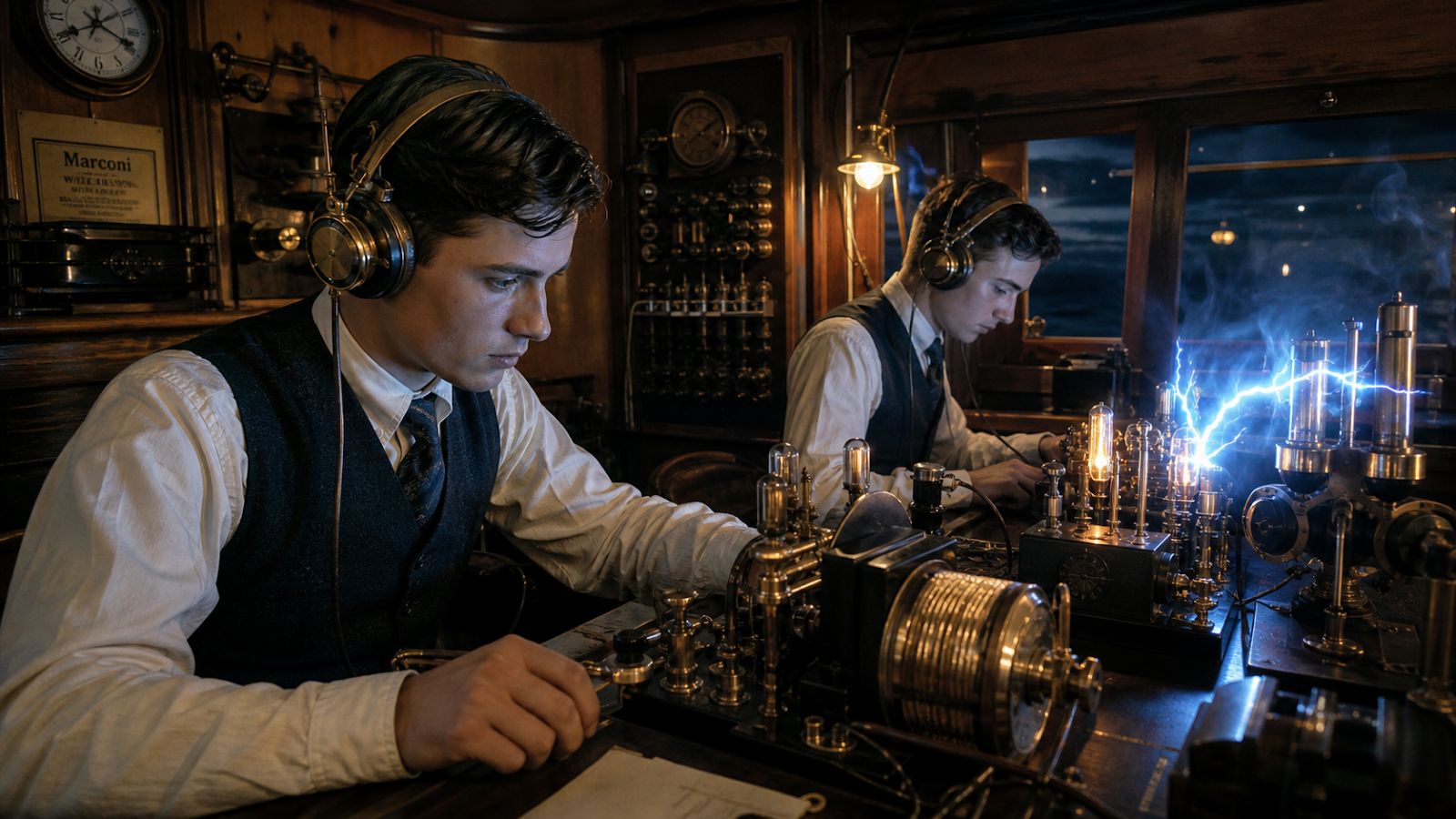
High atop the Boat Deck of the RMS Titanic, tucked away inside a cramped timber-lined cabin, a relentless rhythmic crackle of blue electric sparks commanded the technological frontier of 1912. In this humming nerve center known as the Marconi wireless room, senior operator Jack Phillips and his junior partner Harold Bride worked tirelessly through grueling shifts, translating the handwritten desires of wealthy passengers into bursts of Morse code. The atmosphere within the small compartment was thick with the scent of hot ozone, lubricating oil, and stale tobacco as the heavy brass spark-gap transmitter pulsed with high voltage. Outside, a crystal-clear Atlantic night stretched endlessly beneath an indifferent canopy of stars, while inside, the operators wore cumbersome leather-and-metal headphones clamped firmly to their ears. In an era when ocean liners had historically been isolated islands adrift in boundless waters, this miraculous apparatus provided an invisible, vital tether back to civilization. The young men, aged just twenty-five and twenty-two, took immense pride in their demanding craft, managing an overwhelming backlog of commercial telegrams bound for the relay station at Cape Race. Yet, nestled amidst mundane personal greetings and stock market updates were urgent incoming signals from neighboring vessels that carried grave portents of immense ice fields lurking directly ahead. Neither operator could foresee that within hours, their electric key would become the sole instrument bridging the chasm between life and death for over two thousand souls.
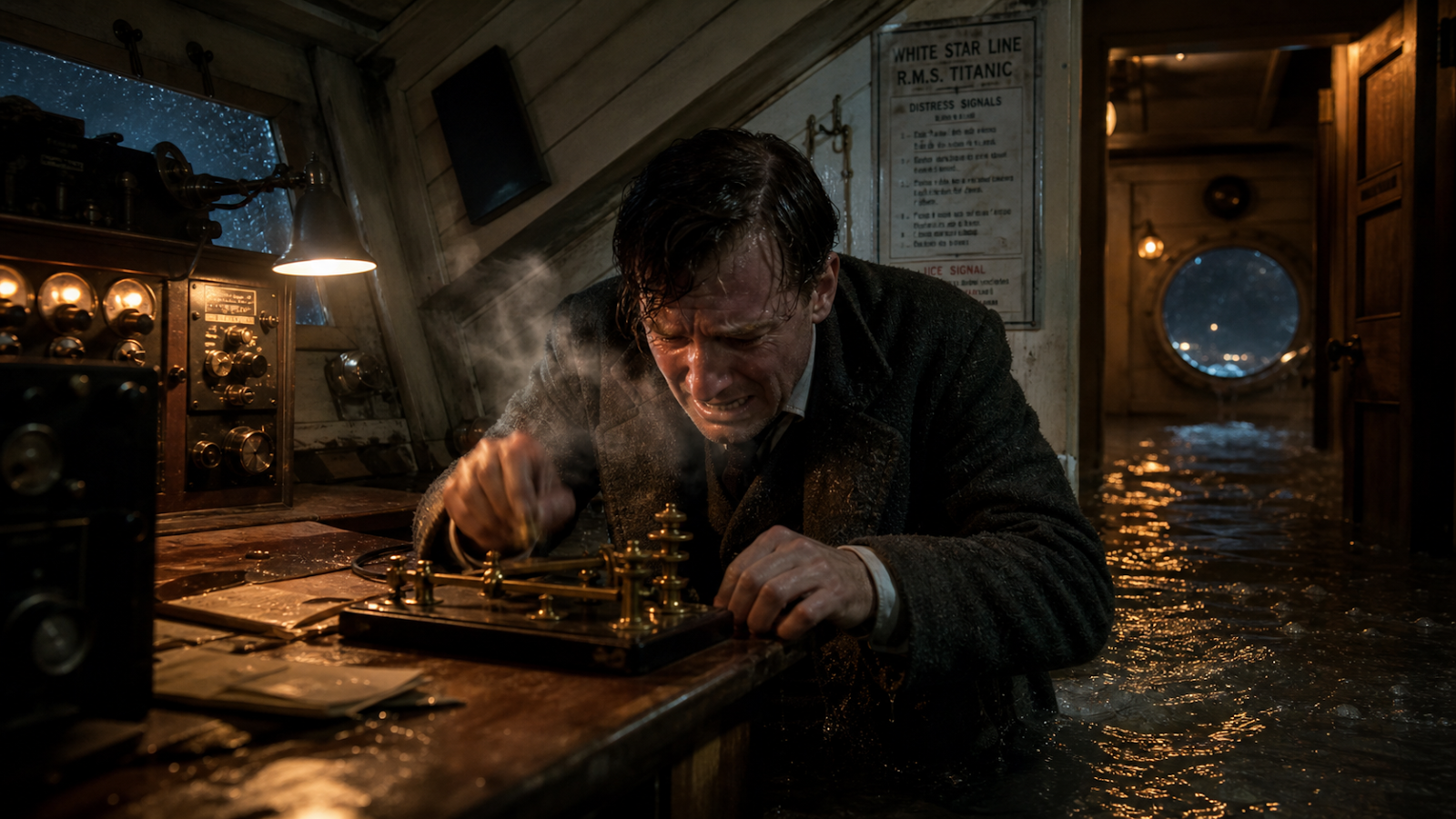
When the violent shudder of the collision reverberated through the hull at 11:40 PM, the quiet routine of the wireless room was instantly shattered. Captain Edward J. Smith soon appeared at the cabin doorway with a grim countenance, quietly instructing Phillips and Bride to prepare a distress call and transmit the ship’s estimated coordinates to anyone listening. For the next two agonizing hours, Jack Phillips tapped relentlessly upon the brass key, broadcasting the traditional maritime distress signal "CQD" before Bride jokingly suggested sending the newly adopted "SOS"—prophetically remarking that it might be their only chance to send it. As far-off ships like the RMS Carpathia and the Mount Temple scrambled to acknowledge the frantic signals, the chilling reality of Titanic’s rapid flooding began to seep directly into the Marconi cabin. Despite the dynamos weakening and the electric voltage steadily decaying, Phillips refused to abandon his post, continuously transmitting vital updates as freezing saltwater encroached across the floorboards. Even after Captain Smith officially relieved the men of duty and told them to save themselves, Phillips remained bent over the telegraph, coaxing the final sparks of battery power into the night sky until the transmitters went permanently dead. Harold Bride managed to survive by clinging to the overturned Collapsible Boat B in the freezing sea, later testifying to Phillips' extraordinary bravery before his colleague succumbed to hypothermia before rescue arrived. The tireless transmissions sent during those desperate hours directly guided Captain Arthur Rostron and the Carpathia across dangerous ice fields to the exact spot where lifeboats floated, ultimately preserving more than seven hundred lives.
The frantic electric whispers sent from the Titanic on that fateful April night forever transformed the landscape of international maritime safety and communication. In the wake of the disaster, sweeping reforms were swiftly enacted worldwide, mandating continuous twenty-four-hour radio watches on all commercial vessels and establishing the universal supremacy of the SOS distress protocol. Jack Phillips and Harold Bride demonstrated that valor in the face of disaster is not confined to the physical helm, but lives equally in the steadfast dedication of those who refuse to silence their voice while others can still be saved. Today, when modern deep-sea submersibles illuminate the skeletal remains of the Marconi deckhouse resting two and a half miles down in the North Atlantic abyss, the silent telegraph equipment stands as a hallowed memorial to human sacrifice. Their story endures as a profound reminder that technology is only as noble as the human hands and hearts that guide it through the dark. As long as ships sail the world's oceans, the memory of those valiant sparks dancing into the freezing midnight air will remain an indelible chapter in the Titanic legend. In the quiet depths where words have ceased, the eternal resonance of their courage continues to speak across generations.

Comments
Post a Comment