When the RMS Titanic set sail from Southampton on April 10, 1912, it was not merely an ocean liner; it was a floating microcosm of early twentieth-century human civilization. Divided strictly into three distinct social classes by rigid Edwardian social norms and British maritime regulations, the ship encapsulated the extremes of extreme wealth and humble aspiration. On the upper decks, the world’s most prominent industrial magnates, aristocrats, and heiresses enjoyed accommodations that rivaled the finest palaces of London, Paris, and New York. Millionaires like John Jacob Astor IV and Benjamin Guggenheim strolled through French Renaissance dining saloons, played squash on regulation courts, and sipped fine vintage ports in Jacobean smoking rooms. Meanwhile, deep in the forward and aft lower decks, over seven hundred steerage passengers from dozens of European nations gathered in the third-class general rooms. These emigrants—families from Ireland, Scandinavia, Syria, and Eastern Europe—carried all their earthly possessions in humble cardboard suitcases and wicker baskets. For them, Titanic was not a leisurely cruise; it was the golden gateway to a new life of freedom and opportunity in America. The coexistence of these two vastly different worlds aboard a single hull remains one of the most poignant narratives of the modern era.
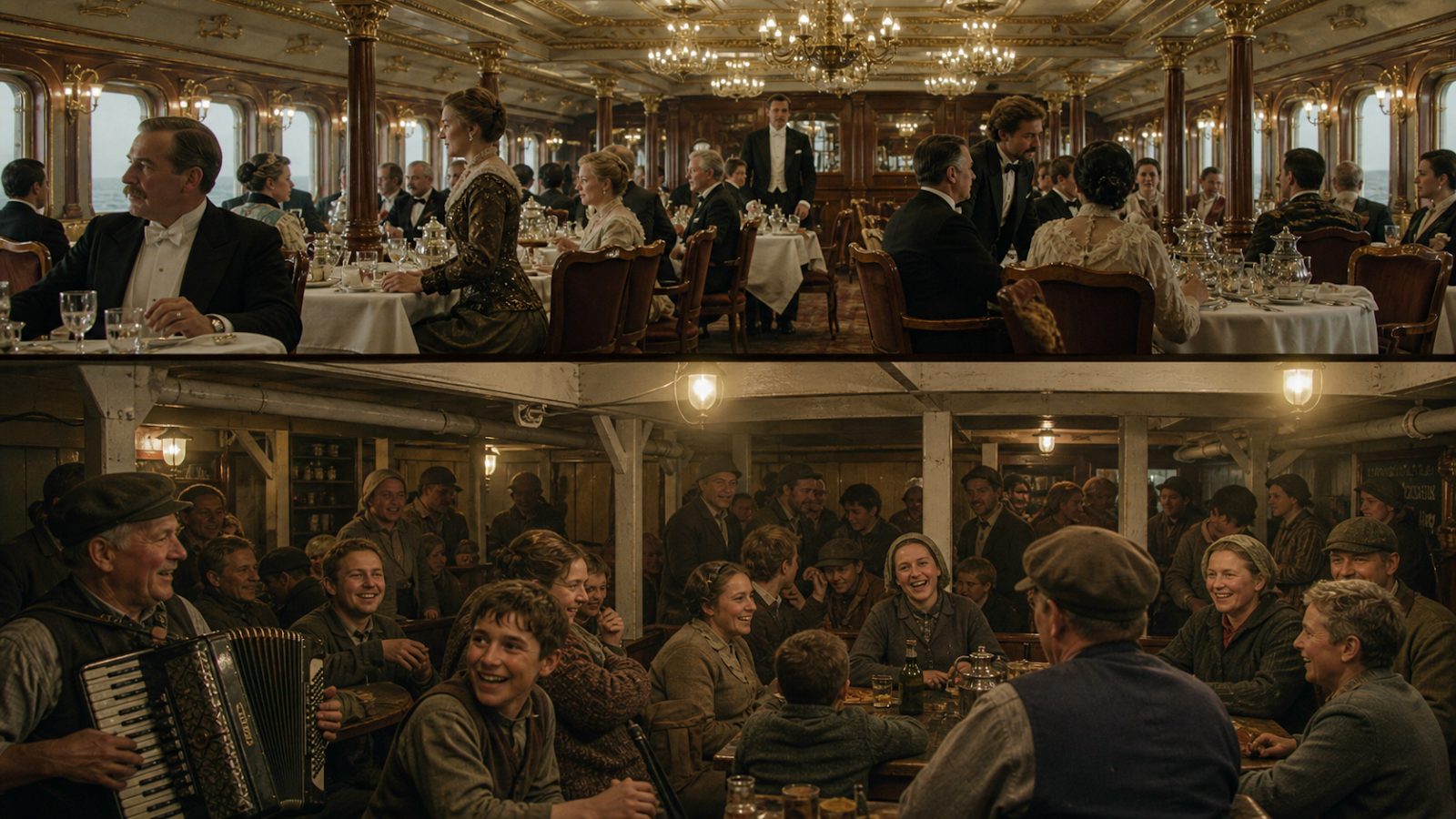
Unlike previous transatlantic liners where steerage passengers slept in open communal dormitories, the White Star Line had revolutionized third-class travel by providing private family cabins and three wholesome hot meals a day. For many impoverished immigrants, the fresh bread, roast beef, and running water aboard the Titanic represented the highest level of luxury they had ever experienced in their lives. In the evenings, while first-class passengers engaged in refined political debate over brandy, the third-class common spaces came alive with energetic Celtic fiddle tunes, bagpipes, and spontaneous folk dancing. But when tragedy struck in the freezing North Atlantic, the physical segregation between the classes became a deadly barrier. The maze of narrow corridors, locked security gates designed to comply with US immigration quarantine laws, and a lack of clear announcements left many steerage families completely disoriented. While first-class women and children were promptly guided to the Boat Deck with a survival rate of ninety-seven percent, only forty-six percent of third-class women survived the disaster. Entire immigrant families, like the Goodwins of England and the Sages of Peterborough, chose to perish together on the freezing lower decks rather than be separated during the chaotic evacuation. Heartbreaking survivor testimonies describe mothers singing lullabies to their children in third-class cabins as the dark sea steadily claimed the lower corridors. The loss of these humble dreamers, whose names were barely noted in newspapers of the era, represents the deepest human tragedy of the sinking. Their shattered aspirations of building a new future in the American West and Canadian plains became forever entombed in the North Atlantic void.
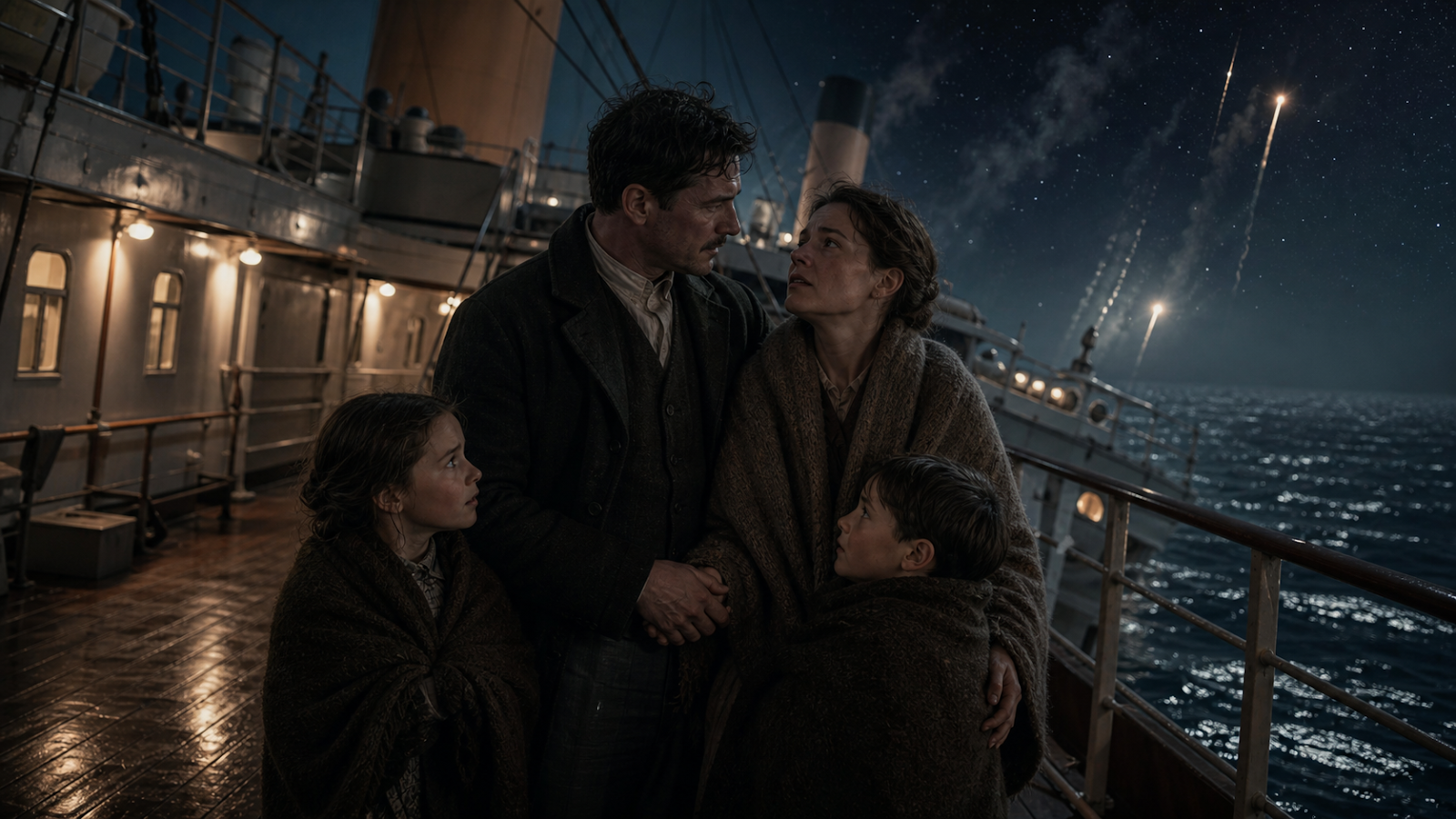
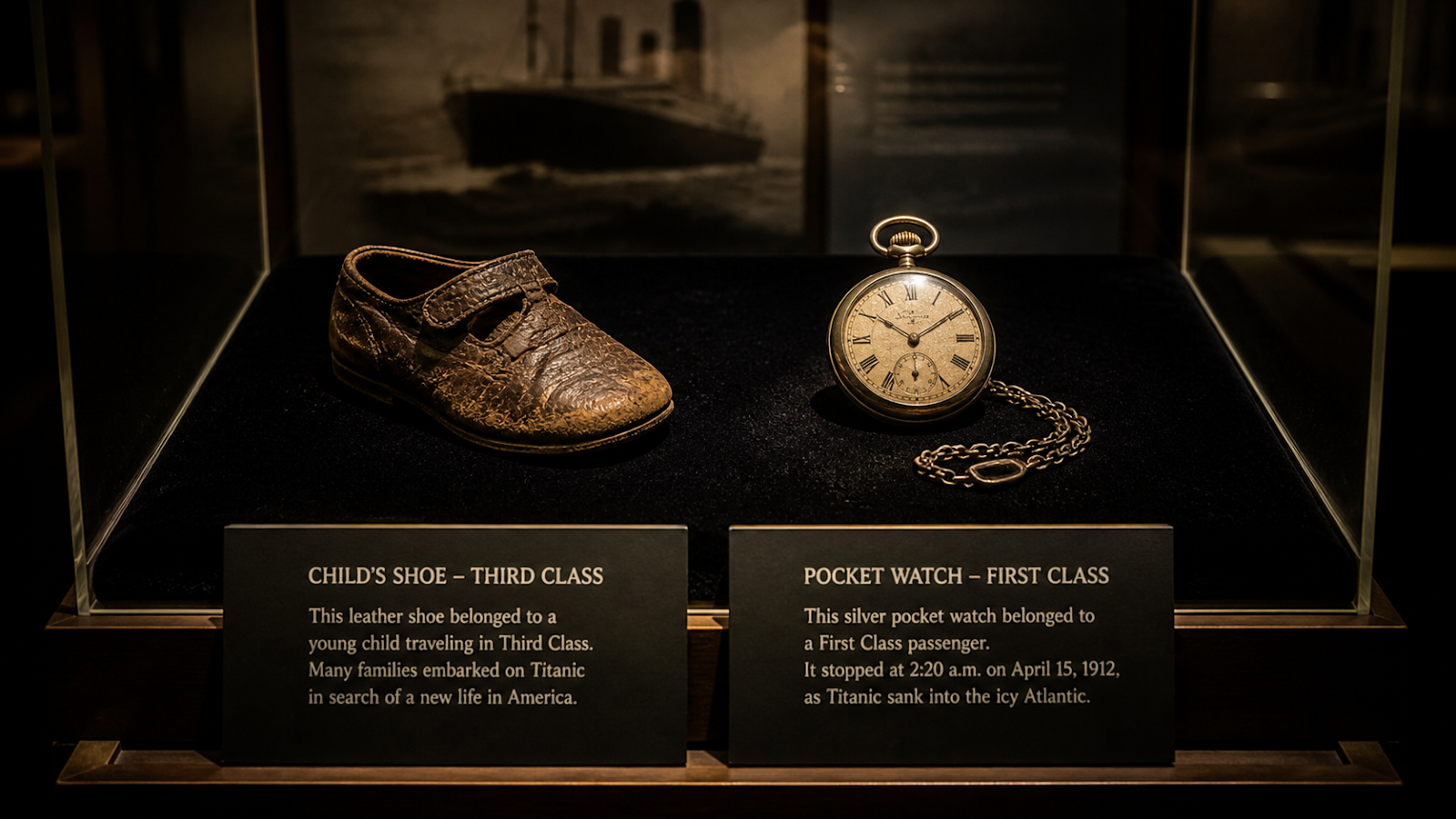
When the rescue ship Carpathia arrived in New York harbor with the survivors, the stark contrast between classes remained visible to the thousands waiting on the rainy docks. While first-class survivors were whisked away to luxury hotels by private carriages, steerage survivors stepped onto the pier with only the blankets on their backs and no money in their pockets. Yet, the catastrophe fundamentally altered Western society’s perception of class, privilege, and shared human vulnerability. The sinking proved with brutal clarity that icebergs and ocean waves make no distinction between a billionaire’s fortune and an immigrant’s humble dream. Today, when visitors gaze upon the recovered artifacts in museum exhibitions—a child’s leather shoe from third class beside a diamond necklace from first class—the shared humanity of all passengers is unmistakable. The Titanic stands as an eternal reminder that in the grand voyage of life, we are all fellow travelers sharing the same fragile vessel. The dreams of those who perished in the steerage cabins remain just as sacred and timeless as the legends of the gilded elite. Their memories are forever united in the silent sanctuary of the ocean floor.
Comments
Post a Comment