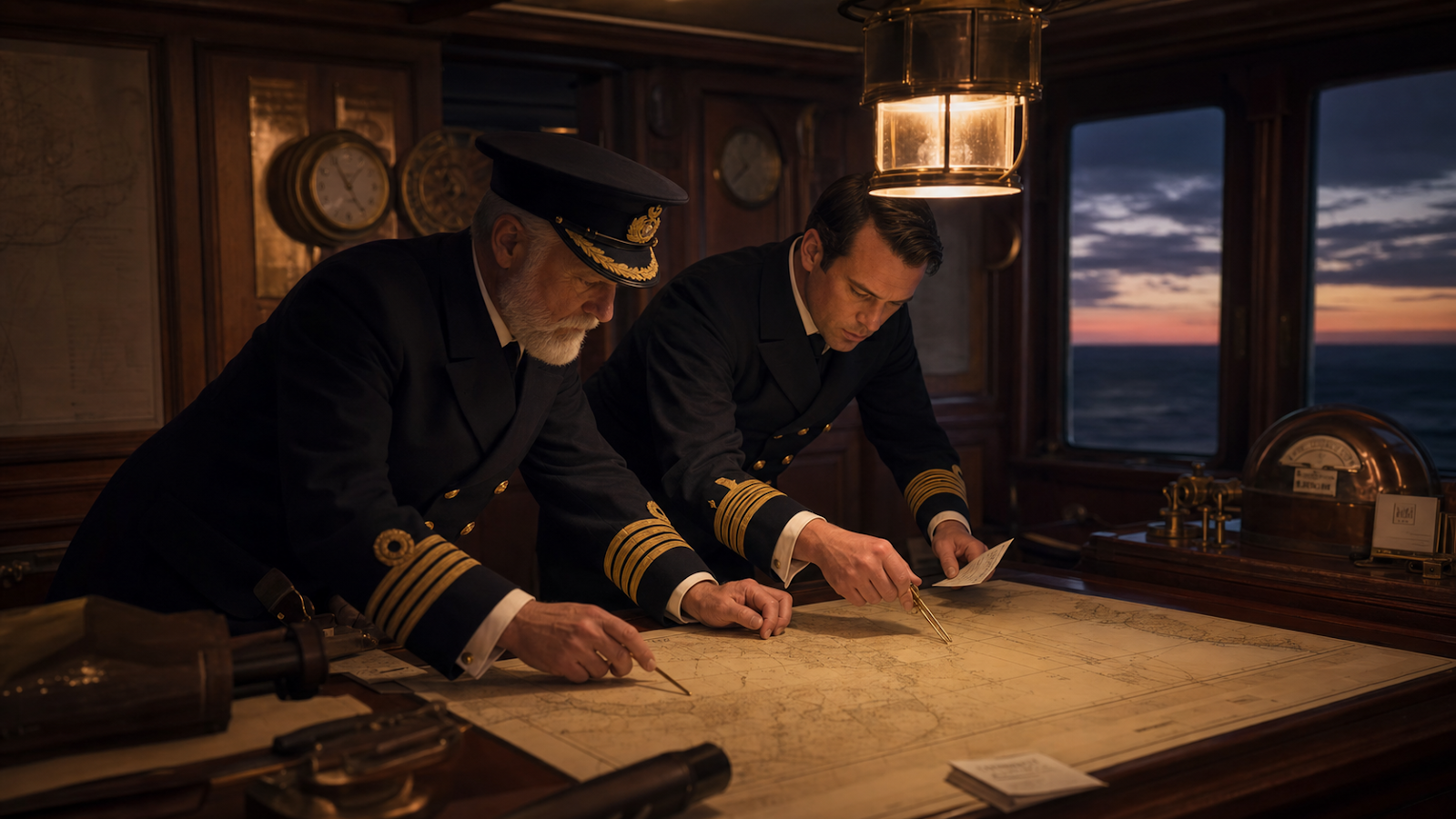
In the collective human imagination, the loss of the RMS Titanic is often viewed as a sudden, unpredictable blow of cosmic misfortune. Yet historical inquiry reveals that on April 14, 1912, the North Atlantic was practically screaming with warning signs of unprecedented peril. Throughout that clear, bitterly cold Sunday, at least six separate wireless telegrams detailing massive ice fields, growlers, and towering bergs were transmitted directly to the Titanic by nearby vessels. Liners like the Caronia, the Noordam, the Baltic, and the German steamship Amerika specifically warned of heavy pack ice directly along the Titanic’s intended shipping lane. In the ship’s chartroom, navigation officers marked the reported coordinates on their maps, acknowledging the presence of ice in the vicinity. Yet, following standard maritime practices of the Edwardian era, Captain Edward J. Smith maintained a blistering cruising speed of over twenty-two knots. Captains of the era believed that on a clear night, any dangerous obstacle would be spotted by lookouts in time for a fast-turning ship to alter course safely. This dangerous cocktail of overconfidence, industrial pressure, and missed communication set the stage for an avoidable maritime catastrophe.
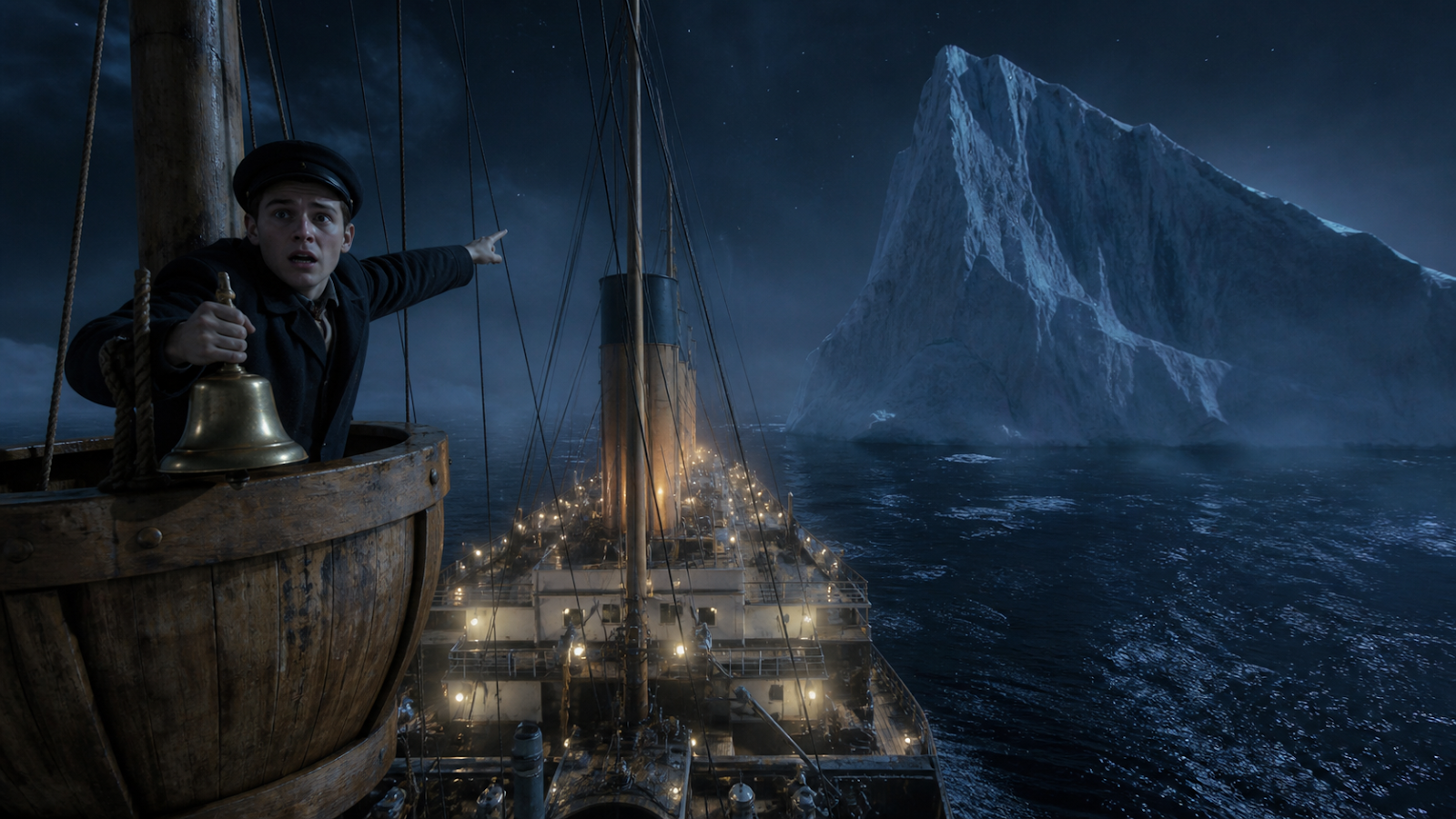
The most critical failure in the chain of survival occurred at 9:40 PM, when the steamer Mesaba transmitted an urgent message warning of a massive wall of pack ice directly ahead of the Titanic’s path. Overworked and exhausted in the Marconi wireless cabin, Senior Operator Jack Phillips set the message aside under a paperweight to finish transmitting stacks of private passenger telegrams, never delivering it to the bridge. An hour later, the nearby steamer SS Californian came to a complete halt after becoming surrounded by dense ice and radioed Titanic with a direct warning: "We are stopped and surrounded by ice." Annoyed by the loud, blasting signal in his headphones while trying to reach the Cape Race relay station, Phillips famously snapped back: "Shut up! Shut up! I am busy; I am working Cape Race!" At 11:30 PM, the Californian’s sole radio operator turned off his equipment and went to sleep, severing communication with the vessel that sat just ten to nineteen miles away. Meanwhile, up in Titanic’s crow’s nest, lookouts Frederick Fleet and Reginald Lee scanned the ink-black horizon without binoculars, which had been locked away in a cabinet in Southampton when an officer transfer left the keys behind. The sea was unnaturally calm and mirror-flat, eliminating the phosphorescent white waves that typically broke against the base of icebergs to warn lookouts in the dark. At 11:40 PM, Fleet suddenly spotted a towering black mass rising thirty feet out of the calm water directly in the ship's path, frantically striking the crow’s nest bell three times and telephoning the bridge: "Iceberg, right ahead!" First Officer Murdoch reacted instantly, ordering the helm hard a-starboard and reversing the engines, but the immense inertia of forty-six thousand tons moving at high speed made a head-on avoidance physically impossible. The starboard bow struck the submerged shelf of glacial ice thirty-seven seconds later, condemning the Ship of Dreams to the ocean floor in one of history’s most harrowing sequences of missed chances.
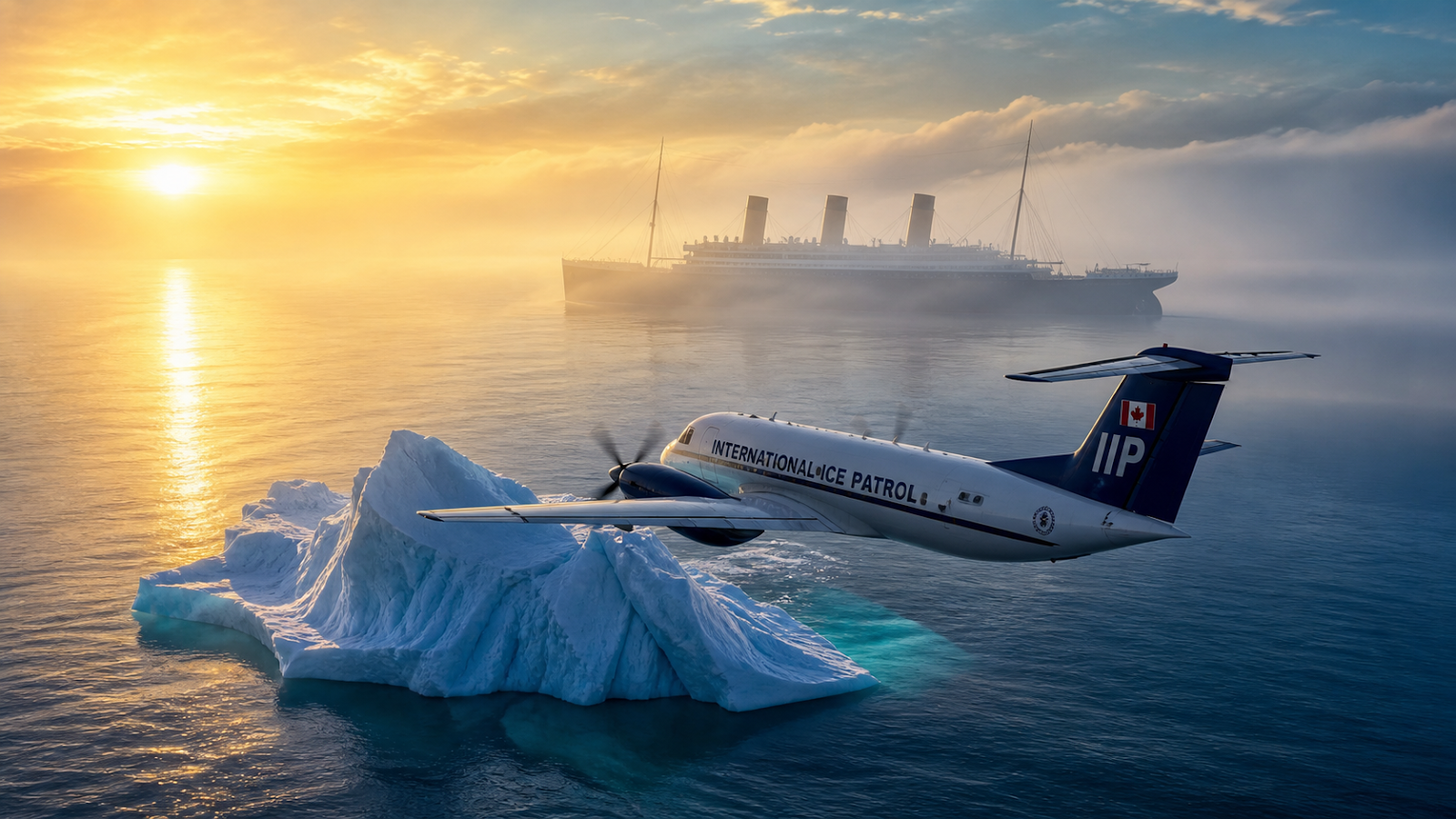
The tragic anatomy of the Titanic’s collision stands as one of history's most profound case studies in hubris, systemic failure, and complacency. In the wake of the disaster, British and American inquiries completely revolutionized international maritime safety governance. The International Convention for the Safety of Life at Sea (SOLAS) was established in 1914, mandating lifeboats for every person on board, continuous 24-hour radio watches on all ships, and the creation of the International Ice Patrol. Since the founding of the International Ice Patrol, not a single life has been lost to iceberg collisions in the North Atlantic shipping lanes under its watch. The bitter lessons paid for by the fifteen hundred souls lost in 1912 became the sacred foundation of modern navigational safety worldwide. When we look back across more than a century of history, the story of Titanic reminds us of the critical importance of humility in the face of nature’s immense power. It teaches every generation that listening to the warnings of the present is the only way to safeguard the future. The voices of that April night still echo across the waves, guiding every ship that sails beneath the stars.
Comments
Post a Comment