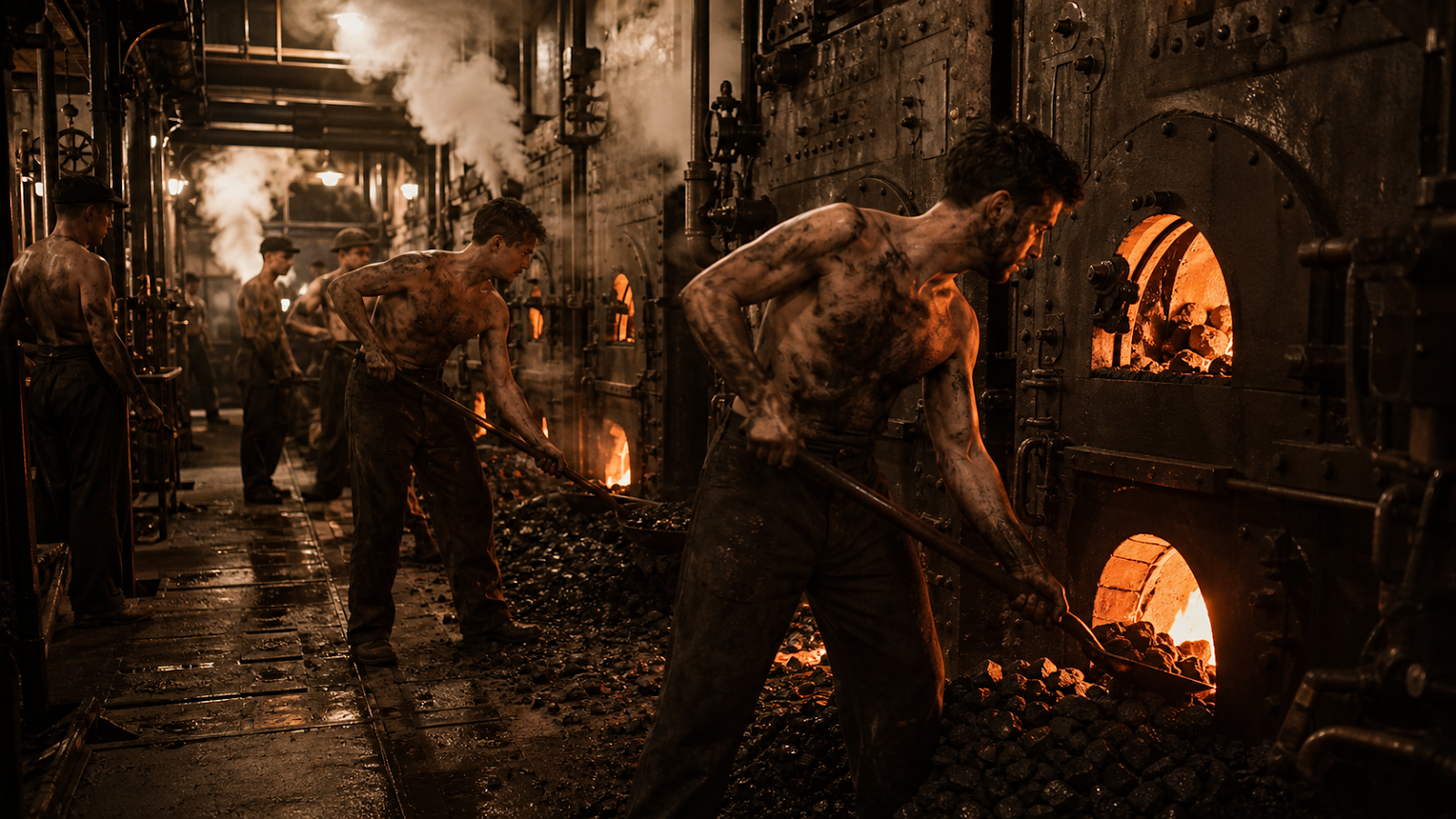
Far beneath the opulent palm courts, plush Turkish baths, and chandeliers of first class lay the sweltering, thunderous industrial heart of the RMS Titanic. Spanning six cavernous boiler rooms across the ship’s lower keel stood twenty-nine colossal boilers, each housing multiple roaring furnaces that consumed over six hundred tons of coal every single day. Manning this subterranean underworld was a crew of over one hundred and seventy firemen, trimmers, and greasers known throughout the maritime world as the "Black Gang." Stripped to their waists, their skin coated in thick layers of black coal dust, soot, and dripping sweat, these men endured blisteringly intense temperatures exceeding one hundred and twenty degrees Fahrenheit. With heavy iron shovels swinging in relentless four-hour shifts, they hand-fed roaring fires to generate the massive steam pressure required to propel forty-six thousand tons of steel across the ocean. Their world was entirely cut off from the fresh sea breeze and sunlight of the upper decks, vibrating constantly to the deafening roar of fire and iron pistons. When the iceberg sliced into Titanic’s forward hull on the night of April 14, 1912, the catastrophic breach occurred directly through Boiler Room No. 6. In that instant of blinding terror, these soot-covered workers became the very first line of defense in a desperate battle to save thousands of lives.
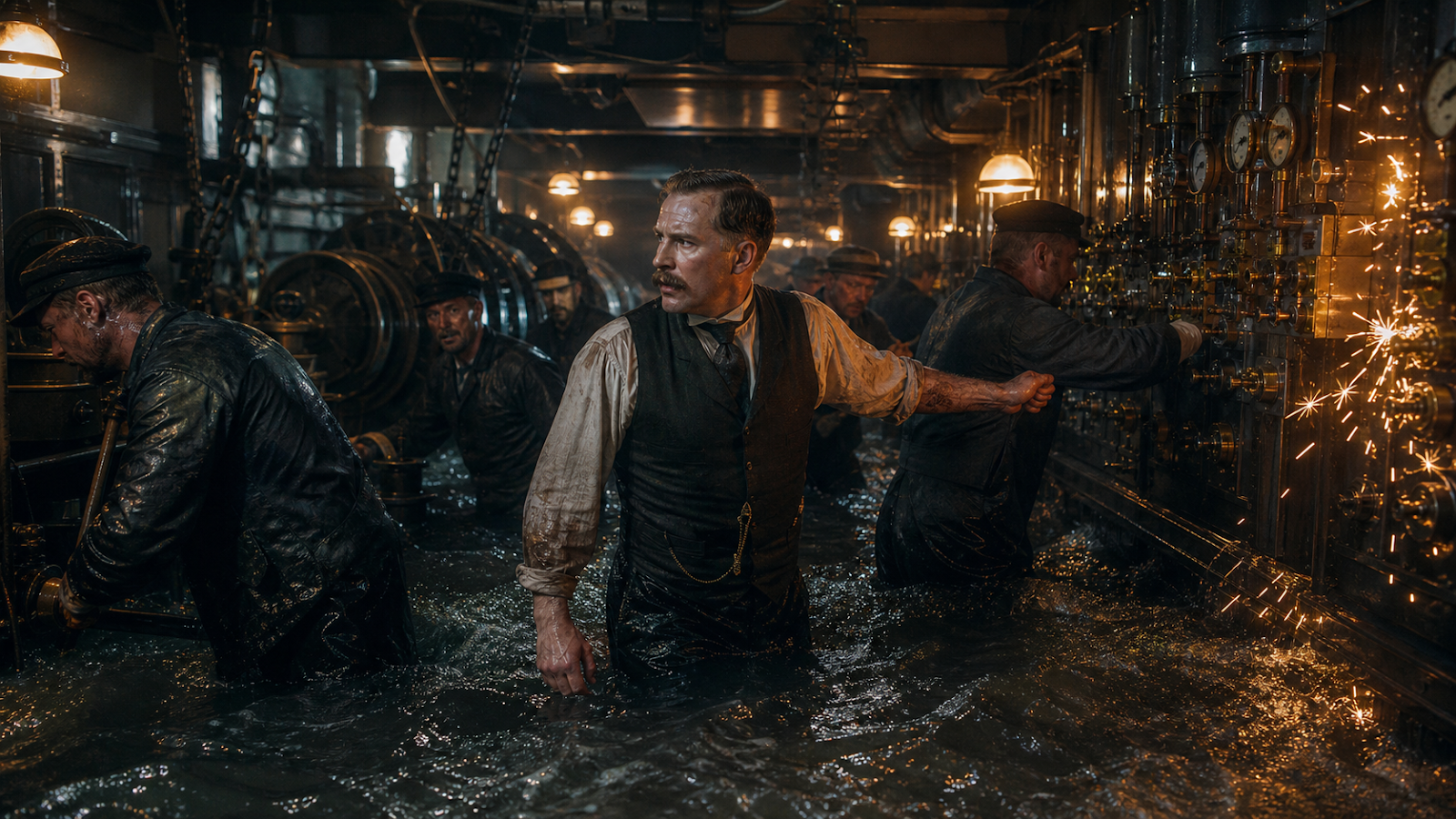
As the hull tore open and a torrential cataract of freezing seawater exploded into Boiler Room 6, Leading Fireman Frederick Barrett barely managed to dive under the closing watertight door into Boiler Room 5 before the compartment fully flooded. Rather than fleeing to the safety of the boat decks above, Chief Engineer Joseph Bell and his devoted engineering staff ordered the firemen to remain at their posts deep in the bowels of the vessel. They understood that if the icy water hit the red-hot boiler furnaces, massive steam explosions would instantly rip the ship apart and sink it within minutes. Working in freezing water that soon rose from their ankles to their waists, the engineers and firemen feverishly raked out fires, vented dangerous steam pressure, and kept auxiliary bilge pumps running at maximum capacity. By bravely maintaining electrical generation, they kept the ship’s hundreds of electric lights burning brightly and powered the Marconi wireless telegraph transmitter until the final moments before the plunge. Their heroic sacrifice bought nearly two and a half hours of vital time, allowing crew members on the boat deck to launch eighteen lifeboats and save over seven hundred souls. Down in the darkness, amid failing bulkheads and groaning steel supports, not a single one of the Titanic’s thirty-five engineers and chief mechanics attempted to save themselves. Chief Engineer Bell and his men worked tirelessly until the rising ocean finally submerged the dynamo room at 2:15 AM, plunging the ship into total darkness just minutes before the breakup. Every single engineer died at his post, offering their lives in the freezing dark so that women and children on the upper decks could escape into the starlight. The staggering selflessness of the Black Gang and engineering crew stands as one of the most sublime displays of industrial courage and professional duty ever recorded.
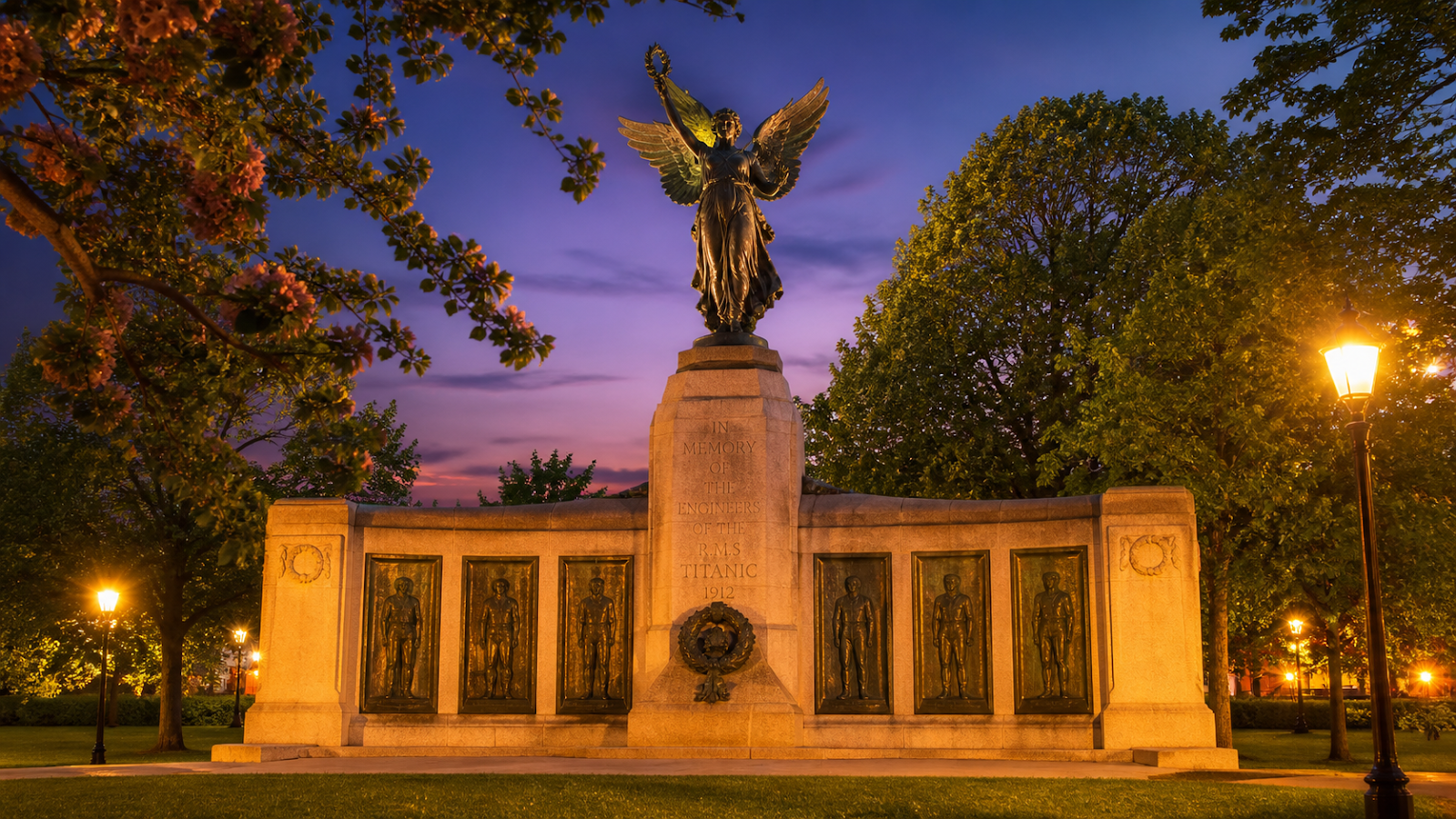
In the aftermath of the catastrophe, the extraordinary heroism of Titanic’s subterranean crew captured the awe and mourning of the international public. In Southampton, England, where the vast majority of the crew lived, a grand memorial was erected to honor the engineer officers who gave their lives without hesitation. Another towering granite monument was raised at the Pier Head in Liverpool, dedicated to all heroes of the marine engine room who perish in the line of duty. Though they possessed no wealth, social standing, or first-class pedigree, the men of the Black Gang proved that true nobility is forged in the fires of sacrifice and solidarity. Their refusal to abandon their posts in the freezing depths remains the quiet engine that powered the survival of every single passenger rescued that night. Over a century later, when we remember the grandeur and heartbreak of the Titanic, we must remember the soot-stained heroes who kept the lights shining in the dark. Their legacy is etched in eternal iron and fire, reminding humanity that the greatest courage is often found in the unseen depths. They will forever be honored as the faithful guardians of the Ship of Dreams.
Comments
Post a Comment